Showing posts with label methods. Show all posts

August 28, 2013

Moving from traditional to progressive teaching

After presenting results-only learning to a group of 150 charter school teachers in Ohio, one enthusiastic participant asked, "What was the biggest challenge in your transformation?" I had discussed discarding all traditional teaching methods -- lecture, worksheets, homework, testing and even grades.

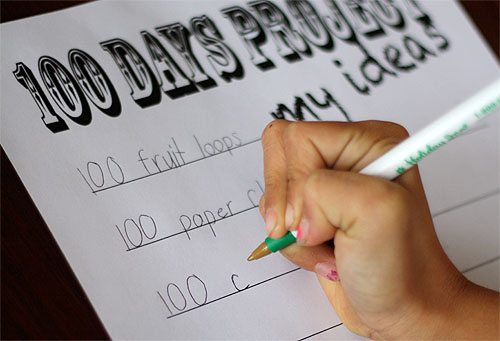
Via: Alphamom.com
This was a challenging question and much broader than the queries I'm used to during these presentations. After some contemplation, I decided the most difficult of part moving from the daily grind of lecture-practice-assign homework-quiz to a vibrant student-centered classroom was replacing the old approach with projects that encompass many learning outcomes.

I spent a lot of time, discarding the old worksheets, workbooks and homework assignments, I told the inquisitive session participant. Many hours heading into the school year and throughout suddenly were filled with planning detailed, step-by-step projects that would take an entire grading period or more to complete.

Along the way, I created brief, interactive lessons that helped students acquire the skills necessary to apply new knowledge to the projects. My evenings during the school year were spent trolling websites or creating instructional videos that students could use throughout their project work and spark more inquiry on their part.

Weaving standards or learning outcomes into lengthy projects that students love and that truly demonstrate learning is a challenging, yet amazing, part of creating a progressive, results-only learning environment.

What challenges do you face?

Don't miss ROLE Reversal: Achieving Uncommonly Excellent Results in the Student-Centered Classroom, now available in the ASCD store, Barnes & Noble and at Amazon.com and Mark's new book, The 5-Minute Teacher: How do I maximize time for learning in my classroom

July 10, 2013

Do your students understand why we pledge allegiance?

At my school, we say the Pledge of Allegiance to begin each day. Many schools do this, but some do it only on major holidays -- like Patriot Day and around Memorial Day. Some schools say it only on the first day of the week.


What has always frustrated me as a teacher is how many students give so little regard to saying the Pledge. Some don't understand its meaning; they also have little or no comprehension of the great history of the flag. They slouch, mumble or stare into space, while their peers pledge.

This video, produced by the History Channel, provides an excellent, brief history of the flag. Share this with your students, no matter what age, and discuss the tradition of the flag and why we pledge our allegiance to it.

Then, encourage your students to stand straight and pledge with pride throughout the year.


Cross-posted at Learn it in 5

Don't miss Mark's book ROLE Reversal: Achieving Uncommonly Excellent Results in the Student-Centered Classroom, now available in the ASCD store, Barnes & Noble and at Amazon.com

July 8, 2013

Lessons from the Tattoo Artist

Students often don't see the value in what we teach. "When am I ever going to use this?" they'll say. A simple example is spelling. Not that I'm a fan of making elementary students copy spelling words over and over again (a ridiculous waste of time), but understanding pronouns, contractions and homophones, for example, certainly has a place in education.
via: funtasti.com
Sadly, all too often, teachers fail to relate what seems to be insignificant to real life, emphasizing why particular lessons are so important.

Sometimes the real-life lesson can be provided in a simple picture. Take this picture from Funtasti.com.

Talk about a picture being worth a thousand words -- even when it's only three!

Share this picture with your students. Begin by asking what is wrong? Some students will figure it out immediately. "The contraction should be the possessive pronoun 'your'," the excellent reader and grammarian will announce. Still, many will scratch their heads, failing to see the problem.

Not only does the picture help teachers explain the homophones, it provides a wonderful real-life teachable moment.

"Remember class, if you don't know the difference between 'you're' and 'your,' stay away from the tattoo artist."


Cross posted at ASCDEdge

June 20, 2013

How can teachers de-clutter students' brains?

According to recent research, adolescents don't think the same way that adults do. Earth shattering? Probably not; however, according to Iroise Dumonthell, of University College London's Institute of Cognitive Neuroscience, the difference may be more about clutter than it is about experience.

Photo credit: Telegraph.co.uk
In an article in The Guardian, outlining the research, Dumonthell says, "It is not always easy for adolescents to pay attention in class without letting their minds wander, or to ignore distractions from their younger sibling when trying to solve a maths problem." 

Dumonthell and his research partners suggest that this clutter comes from differences in brain development. While this seems to be more about neurology than it is about education strategy, the research has me wondering what teachers can do to help remove the clutter in our students' brains. 

In fact, I considered the possibility that we may be the ones cluttering those young thinkers with a lot of unnecessary information. 

So, what do you think? Can we de-clutter students' brains and, if so, how?


Don't miss Mark's book ROLE Reversal: Achieving Uncommonly Excellent Results in the Student-Centered Classroom, now available in the ASCD store, Barnes & Noble and at Amazon.com

June 16, 2013

The More

I'm not a particularly religious person, but I do attend mass with my Catholic family occasionally. I was struck by the homily today, in which the priest used the phrase, "the more."

Photo credit: UPI.com
The phrasing made the message especially powerful, since I don't think I'd ever heard the adjective "more" used as a noun. As I often do with speeches of any kind, I found myself wondering how the lesson might be applied to the classroom.

This one was pretty easy, as its meaning wasn't hidden. "The more" is simply doing more than is expected. The story in the homily explained how a Pharisee invited Christ into his home for dinner and provided what he believed to be appropriate respect and courtesy.

Meanwhile, a woman, known as a sinner, washed Christ's feet with her hair, making the Pharisee wonder why Christ wouldn't dismiss such a sinner. She did more than simply open the door to her home, though, and Christ forgave her.

So, I wondered, how can teachers give their students The More?

We invite them into our classrooms; we give them books, activities and tests. Then, sadly, we often send them away.

Are we the Pharisee, who simply opened the door?

Or, are we the woman, who always gives The More?

Which one are you?


Don't miss Mark's book ROLE Reversal: Achieving Uncommonly Excellent Results in the Student-Centered Classroom, now available in the ASCD store, Barnes & Noble and at Amazon.com

June 4, 2012

Homework rants

As one school year ends and talk of another begins, I'm already wondering how I can convince my colleagues that assigning traditional nightly homework is a waste of time and a practice that has absolutely no effect on achievement.

Thought I'd begin here:
 Don't worry, if this doesn't sway them, I've got more.

May 17, 2012

Academic teams improve teaching and learning

Next year, my school is returning to academic teaming for the first time in many years. Not surprisingly, some teachers have reservations. I think this is mainly because they don't know the benefits of teaming.

Hoping to allay their fears, I created this presentation on teaming and working in extended blocks of time.

Let me know if you have any suggestions for improvement.

March 14, 2012

Patience helps independent learners develop

Photo credit: Project 365 Challenge
As I've written on several occasions, a successful Results Only Learning Environment requires patience and perseverance. When students struggle early on with project-based learning and self-evaluation, I sometimes find myself wanting to return to worksheets and grades.

Of course, I don't give in to these urges. As I tell my students, we have to stay the course. It always pays dividends in the end.

I'm seeing these dividends now in a class that not more than a month ago, I was concerned might never adapt to results-only learning. Many students just didn't seem to be improving.

This week, though, it suddenly struck me that things were clicking. One girl, who has been a reluctant participant in our year-long reading project, was quietly devouring a book, unwilling to look up from her rapidly-turning pages. Another young lady, who had expressed dissatisfaction with the class earlier in the year, was eagerly bookmarking and annotating a web article she'd located, making a special effort to come to me and ask how the annotation looked. Two more students were sitting together quietly reading to one another from a novel I'd just distributed and asked them to read by the end of spring break.

I was amazed by the quality of production in the room. Patience with the results-only system had helped reluctant students develop into independent learners. It seemed like a long wait, but it was definitely worth it.

March 5, 2012

Get students excited about their supplies

Do your students come to class without notebooks or folders? (It could be that they hate what they do with them, but that's a post for another day.)

What if they took pride and ownership in their supplies? This video demonstrates a nifty project that might just get reluctant learners to bring their notebooks and folders all of the time.

March 3, 2012

Grades, Obama and other trending posts

Here's a list of recent posts you may have missed that have sparked some interest on Twitter, on the ROLE Reversal blog and other places.

Engaging reluctant learners with Diigo

I have some reluctant learners, and I've spent much of the year helping them evolve into results-only learners. Since we read all of the time in my language arts class, I'm constantly looking for ways to inspire the reluctant students to read and write.

Technology is always useful in this area. Recently, I discovered the power of Diigo for educators. I created some class groups, and soon my students were surfing the Internet for articles of interest, bookmarking them on our class Diigo group and annotating the sites for their peers.

This video demonstrates how to get students started on Diigo. Stay tuned for more on this powerful social media tool and how it's helping me engage reluctant learners.

March 2, 2012

Results-only math lesson

Found this very cool video over at Joanne Jacobs' blog. This is an excellent example of results-only learning in a math class (minus the test she mentions at the beginning, of course). I would recommend that Leah follow up with a collaborative activity to review and process the warm-up or even a second pass at the same activity to ensure mastery.

Overall, this is a fine example of how to get students engaged in math without boring them with worksheets.

March 1, 2012

The evolution of a Results Only Learning Environment

Most traditional classes never evolve. They start stale and only get worse with each day of boring drill-and-kill routine. The Results Only Learning Environment is different, because it is constantly evolving.

Even if some activities are repeated periodically -- time for daily reading in a language arts class, for example -- the ROLE teacher is always finding new ways to engage learners. She is constantly pointing them to new technology and other sources of information.

This is especially important for reluctant learners. I have one class this year that has numerous students who are willing to sit idly by and do nothing. It's been a constant challenge to engage them throughout the year. There are days when I think maybe they need to sit and do worksheets, but I quickly realize that what they need is a new, exciting path to learning.

We work on computers often, with my students blogging and writing on private web pages. Even this typically-engaging activity seemed to be boring my reluctant learners. So, I decided to give them what they wanted -- more time to surf the Internet. I introduced them to the social bookmarking site, Diigo. All they had to do was read anything of interest, bookmark it appropriately for our digital library and provide a brief, well-written annotation.

Suddenly, my toughest class was reading, writing and bookmarking articles without extra goading from me. In fact, many started working on the project during their own free time.

Teaching in a results-only class isn't always easy, but when you persevere and find what truly gets students excited about learning, it's always fun.

December 15, 2011

Good use of a bad tool


As a ROLE teacher, I am not in favor of worksheets, workbooks and the like. Very few of these tools offer any freedom to the learner. However, our students are provided with a vocabulary book, which is part of student fees, so I am obligated to make use of it. 

There are many ways I could justify use of the workbook and remain true to my results-only philosophy, but I want to be sure that using the book is neither a waste of time for students nor a waste of money for parents. So, I have learned to take the best parts of the workbook and create the autonomy that my students enjoy so much. 

We simply ignore the mundane multiple-choice and fill-in-the-blank items and apply the lessons to real learning. One such activity involves reviewing strategies for using context clues – a valuable skill for all readers. Instead of completing the worksheets that follow the strategies, I ask my students to return to the novels they’ve selected as part of our independent reading program and apply the strategies there. 

After 15 minutes of reading, they identified previously unknown words in small groups, sharing the strategies they used to learn them. Later, they look up the words on their Smart phones to verify their meanings. This activity provides good use of a bad tool.

December 11, 2011

Are we losing the fight?

An education blogger I read often, Joanne Jacobs, recently posted a link to a traditional teaching program, called DI (Direct Instruction), created by someone from the private sector.

Although I had heard of this, I only knew that it embraces everything I'm against in education: scripted lessons, rules, worksheets and tests, so I had previously dismissed it without further research. The eBook Jacobs linked to on her blog about DI confirmed my suspicions -- that DI is one more in a long line of traditional systems that provide crutches for bad teachers and turn students into mindless automatons.

I decided to share my opinion about DI in the comment section on the post; I was the first. A few days later, I returned to Jacobs' blog to find dozens of comments. I was not surprised by the opinions, most of which were directly opposite of mine. Some outraged fans of Direct Instruction thought I was crazy and defended DI and other oft-used weak practices, like lions fighting for their young.

I was not angered by the comments; after all, these people were only defending what they believe in.

Rather, I began considering how difficult it is going to be to overcome these outdated teaching methods, so we can reform American education. If programs like DI and other scripted, basal-type systems can so easily influence parents and educators, how will modern, more progressive teaching methods, like results-only learning, compete?

I wonder, are we losing the fight with traditional teaching?

November 17, 2011

Parent-teacher conferences are not so bad

The first parent-teacher conferences of the year are tonight. Believe it or not, I'm looking forward to them.

I think this is another advantage of teaching in the results-only classroom. I love talking about the freedom my students get and all of the amazing things they're doing in our workshop setting.

Mostly, I enjoy talking about stamping out traditional education and grades.

Perhaps I'll have some interesting debates.

I'll keep you posted.

October 5, 2011

What is the logic of a homework pass?

Let me begin this post with the precursor that no one has yet clearly explained the logic of homework, so the idea of a homework pass is even more elusive to me.

My 7-year-old, who has more homework than some Ph.D candidates, I think, announced today that she won a homework pass, because she earned stickers for, what else? Completing homework.

Huh?

Is it just me, or is this the craziest system in education? First, teachers inundate second-graders with hours of homework, which they, of course, hate.

Then, if  the students complete enough homework, the teachers hand out a homework pass, which forgives future homework, as some twisted reward for doing homework in the first place.

So, what exactly is the message?
  • Do boring homework. . . reason unknown.
  • Complete a particular amount of homework, and you can stop doing homework for a night.
I don't get the logic. I wonder if my 7-year-old does.

October 3, 2011

Getting students to collaborate

A reader e-mailed me about students wanting to work just for the sake of completing a task and also not talking enough. Sounds strange, I know, but in a successful workshop environment, communication is necessary. Here's my response to her queries.

First, I don’t think doing a task for completion is necessarily a bad thing.
Many people are task-driven, which can be positive when it comes
to achieving goals. Obviously, the learning is important, and we want to
constantly do what we can to develop that critical thirst for learning that
a ROLE typically creates.

Next, If they aren’t “putting it together” and not talking, there are a few steps you can take. Start with breaking the project into smaller steps and focusing on them one at a time. The kids may not be talking because they may be struggling. 

Be sure to move about after a mini lesson on the step you want completed and listen in. I often sit with a group but say nothing. (In my book, I write how difficult this is for teachers, because we’re so conditioned to simply give it to them). 

After some silence, someone will ask a question. Once you direct them a bit, ask your own questions, “What would you do? What do you think is the first step? Who will be responsible for what?”
Unfortunately, students don't take immediately to collaboration, because most have spent the bulk of their school years sitting in rows and working independently. So, don't be surprised if you have to teach them how to work together.

September 14, 2011

Old habits die hard

Recently, I encountered several teachers, who are stuck in their traditional world, and it hit me that old habits die hard.

One teacher announced that her students were awful at following simple directions for bell work, which included putting a proper heading on the paper. (These are 7th graders.) "So," she complained, "We  spent the entire class period on bell work.

My thought? Throw out the bell work. Then, she'd have no lesson at all, but the students' enthusiasm might increase.
As students passed through the hallways, another colleague spied a young man who had a ball cap strapped to his belt loop. He was immediately dispatched back to his locker to return the head cover.

My thought? Seriously, is a cap on a belt loop worth taking a teenager's mind off of learning?

Later, a student asked me to go to the bathroom with only a minute left in class. "The bell is about to ring," I told him. He frowned, before informing me that his next teacher never lets students go. So, I told the teacher that a student said, "You never let them go to the bathroom." His response. "I don't."

My thought? What if you had to pee, and I told you it wasn't allowed?

It's remarkable to me that the simplest acts, things that build teacher-student rapport and encourage a thirst for learning, are constantly ignored by veteran teachers.

I guess old habits really do die hard.

July 24, 2011

Five steps to a problem-free classroom

An acquaintance read my ASCD blog post, “How to stop discipline issues forever,” and she said that she was intrigued but also perplexed. “You say you eliminate control and create engaging activities,” she said, “but I don’t see exactly how you eliminate discipline issues.” After some consideration, I decided to follow up with these steps for creating a classroom that is completely free from discipline issues.


Five steps for creating a problem-free classroom
1.      Throw out all rules and consequences – stop posting “Do and Don’t” signs in your room, as these only mean that you are in control of the students, which they hate. Discuss mutual respect with your students, but don’t con them into outlining expectations; this is just assertive discipline disguised as ROLE teaching. Explain that there is no need for rules in a learning community built on mutual respect.
2.      Replace control with freedom – ignore the insignificant rules that most schools have and give students real autonomy. When Rachel says she has to use the restroom, let her. Avoid ridiculous X-hall-passes-per-quarter or remain-in-your-seat-at-all-times policies, as these are further signs of control (they are also rules, which you need to throw out). If a student asks to retrieve a book from his locker, let him. Gently emphasize how much you value his presence in the class, and locker trips will quickly dissipate. Let students choose some learning activities and some collaborative groups. Freedom is the guideline here. Students value it.
3.      Never punish – you will lose all credibility with students, the second you begin punishing them. ROLE teachers simply do not give consequences. If a student is disrespectful or disruptive, most likely you are doing something wrong. You’ve said No to a simple request, you’ve removed a freedom, or your class activity is boring. It’s really this simple. Rather than punish a student for your shortcoming, it’s always better to talk to her one-on-one and explore the problem and its solution together (see step 4).
4.      Build rapport – everything you do either builds or burns bridges with your students. Sarcasm and yelling never work. What you may think is a harmless joke may irreparably damage your relationship with a student. The “bad phone call” is also a problem. Work daily to build rapport with all students, as this will minimize even a typically-disruptive student's desire to be a problem in your class.
5.      Emphasize results-only learning – in addition to year-long projects, narrative feedback and the elimination of all other traditional teaching methods, what creates a thirst for learning is intrinsic motivation. This has to be coached all year. Remind students often that results-only learning is about intrinsic motivation. It is students choosing how they demonstrate learning and taking part in self-evaluation. This constant emphasis of the ROLE will help fan the intrinsic motivation that already exists in students, and the more they understand this, the more they’ll embrace learning and lose interest in disruption.