While browsing YouTube, I came across this video by a student, enlightening us on the problems with grading participation in class. Sounds about right to me. What do you think?
Showing posts with label punishment. Show all posts
Showing posts with label punishment. Show all posts
December 26, 2011


September 6, 2011
Bring students into the rules discussion
One of my favorite bloggers, the extremely bright Pernille Ripp, sparked some Twitter chatter with her recent post on classroom rules.
Ripp says that students already know the rules, and we don't need to quote them in our classrooms.
Obviously, as a teacher in a Results Only Learning Environment, I am on board with this approach. It's a difficult one for many teachers to embrace, though.
When I tell colleagues that I have no classroom rules, they are shocked. For some reason, there is an obsession with posting a bunch of Do's and Dont's around the room in gigantic type size.
As Ripp suggests, students already know the rules, especially older kids who have had rules and consequences hammered into them year after year by every teacher with a whiteboard or poster and tape. So, why repeat them? Why not discuss what will make any class successful, instead? Why not allow the students to lead the conversation, like Ripp did.
Ripp says that students already know the rules, and we don't need to quote them in our classrooms.
'"Isn't this your 6th year in school?" All nodded and starting to wake up a little. "Do you need me to explain the rules or can you tell me what they are?" With this, the buzzing started. That little bit of chatter that kids get involved in when they start to see the light. "We know the rules, I know how to act, we can set the rules...."'
 |
| Photo by: Trexglobal.com |
When I tell colleagues that I have no classroom rules, they are shocked. For some reason, there is an obsession with posting a bunch of Do's and Dont's around the room in gigantic type size.
As Ripp suggests, students already know the rules, especially older kids who have had rules and consequences hammered into them year after year by every teacher with a whiteboard or poster and tape. So, why repeat them? Why not discuss what will make any class successful, instead? Why not allow the students to lead the conversation, like Ripp did.
"I gave my students a voice and let them lead and they showed me they already know. I am so excited for the rest of the year."Give your students a voice, and you will be on your way to a problem-free classroom.
August 22, 2011
Rethinking tests and quizzes
"Today, we'll have a pop quiz." Back in my days as a traditional teacher, I loved this sentence. There was a sense of power and control, when I surprised my students with some sort of test of knowledge over something we'd recently studied or of a chapter in some boring book I had demanded that they read.
 By its most basic definition, the pop quiz is nothing more than a stick, used to punish students. It's not much better than the paddle, teachers used back in the days of corporal punishment. Students are asked to complete some basic task, and then they are tested on the knowledge they retained in a short period of time. If they have not completed the task, they fail the quiz.
Tests are not much different. Students study information the teacher provides, and they are given a list of questions created by the teacher, based on the information that was delivered. The teacher has all of the control -- one reason that tests masquerade as objective assessments, when they are, in fact, very subjective.
If we are to reform our failing education system, it's time to rethink tests and quizzes. To simplify things, the first step should be to eliminate quizzes entirely, as they serve no educational purpose. As Jerome Bruner wrote, teachers should help students "experience success and failure not as a reward and punishment, but as information (The Act of Discovery, 1961)."
So, let's concentrate on tests. Although project-based assessment is the best way to evaluate learning, tests can provide the information, of which Bruner writes.
The key to making good use of a test is to use it strictly as a diagnostic tool. In fact, the word "test" should be replaced with diagnostic. Students should be taught that a diagnostic tool, especially one that contains multiple choice items, is only part of assessment.
Because tests are unreliable and subjective, the results should never be part of a grade, and they should be used to evaluate which learning outcomes need more attention from the teacher. Rather than looking at test results in terms of individual students, they should be considered holistically. So, if 40 percent of a class misses number 8 on a diagnostic, there is either a problem with the item, or the learning outcome needs to be revisited.
When tests are used in this fashion, strictly as diagnostic tools, they become one useful part of evaluation of learning.
Look for more on this subject at this post on raising test scores.
Tests are not much different. Students study information the teacher provides, and they are given a list of questions created by the teacher, based on the information that was delivered. The teacher has all of the control -- one reason that tests masquerade as objective assessments, when they are, in fact, very subjective.
If we are to reform our failing education system, it's time to rethink tests and quizzes. To simplify things, the first step should be to eliminate quizzes entirely, as they serve no educational purpose. As Jerome Bruner wrote, teachers should help students "experience success and failure not as a reward and punishment, but as information (The Act of Discovery, 1961)."
So, let's concentrate on tests. Although project-based assessment is the best way to evaluate learning, tests can provide the information, of which Bruner writes.
The key to making good use of a test is to use it strictly as a diagnostic tool. In fact, the word "test" should be replaced with diagnostic. Students should be taught that a diagnostic tool, especially one that contains multiple choice items, is only part of assessment.
Because tests are unreliable and subjective, the results should never be part of a grade, and they should be used to evaluate which learning outcomes need more attention from the teacher. Rather than looking at test results in terms of individual students, they should be considered holistically. So, if 40 percent of a class misses number 8 on a diagnostic, there is either a problem with the item, or the learning outcome needs to be revisited.
When tests are used in this fashion, strictly as diagnostic tools, they become one useful part of evaluation of learning.
Look for more on this subject at this post on raising test scores.
May 25, 2011
What have we learned about punishment?
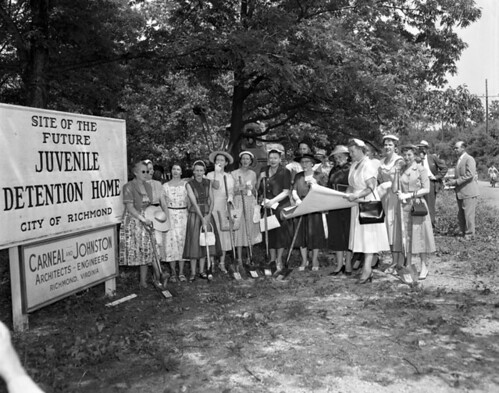
Old-school punishment
After all, in most schools, we still put elementary students in timeout, take away recess or make them change some color-coded card, indicating poor behavior.
We have our own detention centers at school, which we disguise with euphemisms like, Student Management Room.
We are 55 years removed from Richmond's Juvenile Detention Home, but how much have we learned?
Subscribe to:
Posts (Atom)